Why the Malays are returning to Umno


UMNO still retains Malay support. The support of the dominant Islamic race for Pas, an Islamist party that has been fighting neck and neck with Umno for the Malay ground for more than five decades, continues to dwindle.
This was reflected yesterday in Barisan Nasional's double victory in Merlimau and Kerdau, two Malay-majority constituencies, and in the results of recent Umno-Pas electoral battles.
Nearly 90 per cent of voters in Kerdau were Malays while Malays comprise 65 per cent of voters in Merlimau.
Umno candidates who represented BN in the by-elections secured a 3,643 vote-majority in Merlimau and a 2,724 vote-majority in Kerdau, higher than the results in the 2008 polls.
In 2004, BN candidates won Merlimau by 2,154 votes and Kerdau by 1,615.
At the last Umno-Pas showdown in Tenang, Johor, 83 per cent of Malay votes went to the Umno candidate.
The battle between the two parties in Galas, Kelantan, saw Pas' support reduced to about 10 per cent while the by-election in the almost exclusive Malay constituency of Manek Urai, also in Pas' home base of Kelantan, saw Pas' previous 1,352-vote majority slashed to 65.
Why are Malays, particularly in rural areas, returning to Umno?
One reason is the lack of trust in Pas to guarantee their future and that of their children.
Many are not convinced that their religious, economic and political priorities can be taken care of by Pas under the alliance it entered with Parti Keadilan Rakyat and the secular DAP, despite continuous assurances from Pas.
Recently, party spiritual leader Datuk Nik Abdul Aziz Nik Mat said his party had never forsaken Malay rights.
At a Pas convention on empowering Malays in Selangor, the Kelantan menteri besar of 20 years said Pas prioritised the needs of Malays because they were the largest Islamic race in Malaysia.
The convention hoped to silence critics who had derided the party for being anti-Malay in aligning itself with DAP.
Another reason was people's fear of Pas' new politics. Pas even scared away its activists when it embraced non-Muslims as members.
The more conservative members and supporters, mostly in rural areas, think the party had deviated from its original struggle as an Islamic movement.
The Malay vote has seen the biggest shift to the opposition over the last five general elections, with Pas being the chief beneficiary.
The party's share of votes increased three-fold from about 376,000 in 1990 to 1.1 million in 2008.
As for Umno winning the Malay middle ground, the younger and more educated Malay voters, in particular, are crucial.
Umno needs to woo them since they are the real players of the new politics.
Nonetheless, the results of the by-elections not only boosted the morale of BN members but also acted as an endorsement of Prime Minister Datuk Seri Najib Razak's leadership and policies.
-New Straits Times


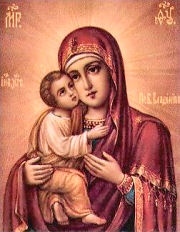 August is often considered the transitional month in our seasonal calendar. It is the time of the year we begin to wind-down from our summer travels and vacations and prepare for Autumn — back to school, fall festivals, harvest time, etc. The Church in her holy wisdom has provided a cycle of events in its liturgical year which allow the faithful to celebrate the major feasts in the life of Christ and Mary. Most notably, during August, we celebrate the feast of the Transfiguration (August 6) and the feast of the Assumption (August 15).
  The days of summer have provided a welcome change of pace. However, while vacations afford us the time to relax and refresh, the change of habits and routines can also have a negative impact on our spiritual lives. As if to re-ignite us, the Church offers us in the plethora of August feasts vivid examples of the virtue of perseverance: six martyrs — two who are named in Canon I of the Mass and two who were martyred during World War II; seven founders of religious congregations, as well as three popes and two kings; the apostle, St. Bartholomew; the great Doctor of the Church, St. Augustine and St. Monica, his mother; the humble patron saint of parish priests, St. John Vianney, and the patron of deacons, St. Lawrence, who joked with his executioners while being roasted alive.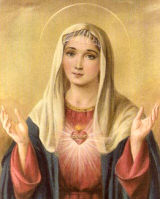
 On November 1, 1950, Pope Pius XII defined the dogma of the Assumption. He solemnly proclaimed that the belief whereby the Blessed Virgin Mary, at the end of her life on earth, was taken up body and soul, into the glory of heaven, definitively forms part of the deposit of faith, received from the apostles.